Choosing the right race is one of the most overlooked performance decisions an age-group triathlete can make. This post walks through six questions to ask before you enter, covering everything from your training environment to your work calendar, so you set yourself up for success before the build even begins.
Signing up for a race is one of the best feelings in triathlon. The motivation spike, the goal locked in, the training block suddenly having a purpose. But after 13 years of working with age-group athletes, I've seen how much race selection itself can influence performance, often before a single training session has been completed.
If performance matters to you, run through these six questions before you hit the entry button.
1. How much time do you have?
Different races demand different preparation windows. An Olympic distance race requires less lead time than a 70.3, which requires less than a full Ironman. Factor in your current fitness base and history with the sport. The shorter the runway, the more demanding, and less enjoyable the build is likely to be.
2. Are there any major life events in the 10 weeks before race day?
A significant other's birthday, a family commitment, a big work deadline; none of these need to rule out a race, but having visibility on them matters. A missed weekend of training in the final weeks of an Ironman build can have a real impact. Knowing about it in advance means you and your coach can plan around it rather than scramble when it arrives.
3. Do you have any holidays planned in the lead-up?
You can complete a strong six-week training block and then lose much of that adaptation during a ten-day holiday where you have no access to a bike or a pool. If the goal is performance, a vacation in the final three weeks before a race needs careful consideration. If the goal is to enjoy the experience and the destination, it matters far less, but it's worth being honest about which one you're actually chasing.
4. What does your work schedule look like during that period?
You know your work calendar better than anyone. The question is whether you've actually looked at it in the context of your race build. The weeks that are hardest to train through are almost always the ones you could have seen coming. A teacher entering a race that falls right after exam season, or a finance professional whose build peaks at financial year-end, is setting themselves up for a difficult few weeks. Not impossible, but harder than it needs to be.
5. What will the training conditions be like in the build-up?
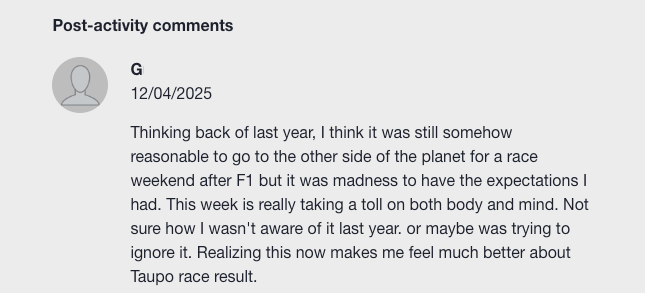
If you're based in the UAE and the race falls in late summer, you're looking at months of extreme heat training. If you're in the northern hemisphere and racing in late winter, outdoor sessions may be severely limited. Neither of these is necessarily a dealbreaker, but both require honest planning and mental preparation for what the build is actually going to look like...
6. Can you simulate the race course in training?
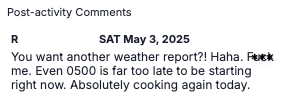
The best preparation is specific preparation. The sooner you know where your environment falls short of what race day will demand, the more time you have to bridge that gap. Racing a hilly 70.3 but based somewhere flat? That's a problem you can solve with targeted gym work and the occasional training trip, if you plan for it early enough. Racing in the heat of the Middle East but training through a European winter? Heat acclimatisation protocols exist, but they take time. Find the mismatch before the build starts, not three weeks out from race day.
None of these questions are designed to talk you out of a race. Triathlon is meant to be enjoyed, and there are plenty of valid reasons to enter an event that have nothing to do with performance. But if racing fast is the goal, the decisions you make before training even starts can be just as important as the training itself.
Choose wisely, then go all in.
~ Rory
- Race selection is a performance decision, the choices you make before training starts matter as much as the training itself
- Build in a realistic preparation window; shorter runways mean harder, more stressful training blocks
- Map your life events against your build; birthdays, holidays, and work commitments in the final 10 weeks can all derail preparation if not planned for